
What you need to know.
Thinking of turning a 3D printer into a small business? Explore ten practical product concepts, what makes each worth buying, and the legal and pricing checks that matter.
- Personalised, genuinely useful objects are easier to differentiate than generic downloaded trinkets.
- Start with small non-safety-critical items you can measure, photograph, reproduce and inspect reliably.
- Check commercial design and font licences, UK product safety duties, fees and consumer rights before taking orders.
- A promising idea is not proof of profit: test actual demand, costs, production quality and fulfilment before scaling.
What kinds of 3D printed products are worth selling?
A strong product solves a small problem, looks intentional, and can be made repeatedly at a price customers understand.
The appeal of selling 3D printed objects is not that every plastic item is special. It is that you can customise dimensions, names, colours and configurations without ordering thousands of identical units. A desk organiser that fits an awkward space, a neat name plaque for a bedroom or a low-risk spare cosmetic cover can offer a reason to choose a maker over a mass-produced product.
These ten ideas are an editorial shortlist, not verified bestsellers or current products in the PrintZilla shop. They vary by customer, design effort, available hardware and local competition. Product safety and intellectual-property duties still apply to a small home seller, and some products require more extensive testing or approvals than ordinary decorative items.
| Idea | Customer reason to buy | Important check |
|---|---|---|
| Personalised desk sign | A distinctive name, business or gamer tag | Typeface rights and sturdy base |
| Custom drawer divider | Fits a space shop products miss | Measurements and smooth edges |
| Hobby tool tidy | Keeps lightweight tools organised | Avoid dangerous loads |
| Planter label set | Names and colour themes | Weather exposure |
| Gift tag or keepsake | Personal date or message | Small parts and recipient suitability |
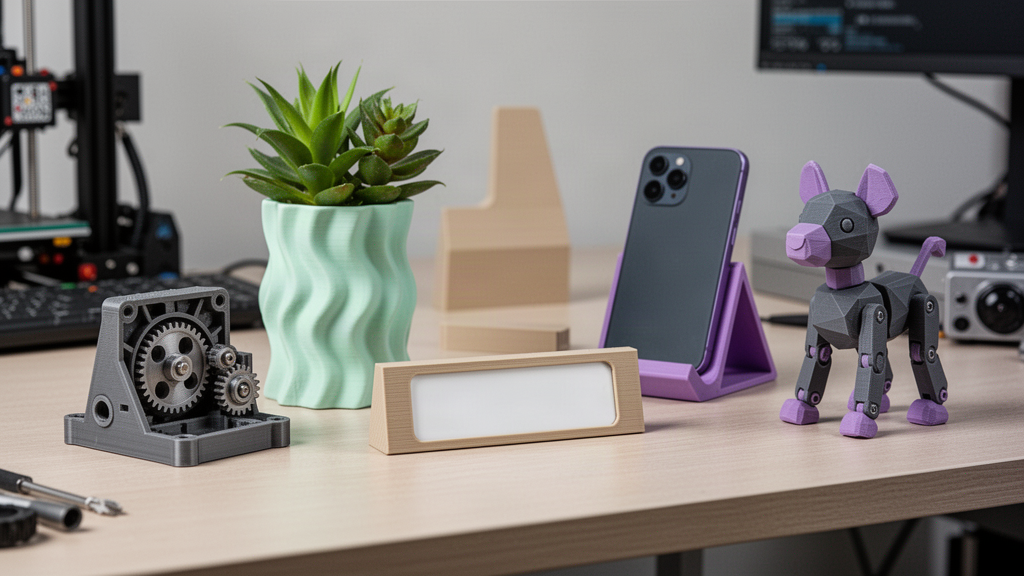
1–3. Personalised name signs, drawer dividers and cable organisers
1. Personalised desk and name signs. A customer's name, gamer tag or short business label creates a natural reason to order something custom. Choose fonts with commercially permitted use and design connected letters or a backing plate so fragile strokes do not detach. Confirm spelling, width and colour in a written preview. A freestanding base must actually support the finished sign, not just look convincing in a render.
2. Made-to-measure drawer dividers. A useful divider can be tailored to a person's stationery, hobby paints or small accessories. The advantage is fit, so request internal measurements and leave appropriate clearance rather than assuming external drawer dimensions describe the usable space. Rounded edges and a small test sample are often more valuable than decorative complexity.
3. Desk cable organisers. Small non-electrical guides can make crowded desks more comfortable to use. Design enough clearance for moving cables without pinching insulation, and keep the holder away from hot power connections. Sell the physical accessory, not a claim that it protects against electrical hazards. For adhesive versions, evaluate the actual mounting surface and adhesive manufacturer guidance.
4–6. Plant markers, desk stands and personalised gift tags
4. Plant marker sets. Gardeners may like markers with herb names or matching family labels. Keep lettering large enough to read outdoors and select materials suitable for the anticipated sunlight and moisture. A printed item should not be marketed as long-lived outdoors without exposure testing, and a plant-care accessory is not necessarily suitable for contact with food or water intended for consumption.
5. Simple phone or tablet stands. The slot can be sized to include a particular phone case, and a customer's preferred viewing angle can distinguish your design. Avoid unstable moving joints or stands that cover charging plugs and heat-generating equipment. Evaluate tipping, edge finish and real devices. Printed plastic stands should not be described as load-certified supports for valuable electronics.
6. Personalised gift tags and keepsakes. Short names, meaningful dates and custom messages can work well for birthdays, weddings and celebrations. Build connected geometry with a suitable attachment hole and a deliberately simple layout. Some small decorations may pose risks to children and pets, so define the intended audience and avoid describing ordinary gifts as certified toys.
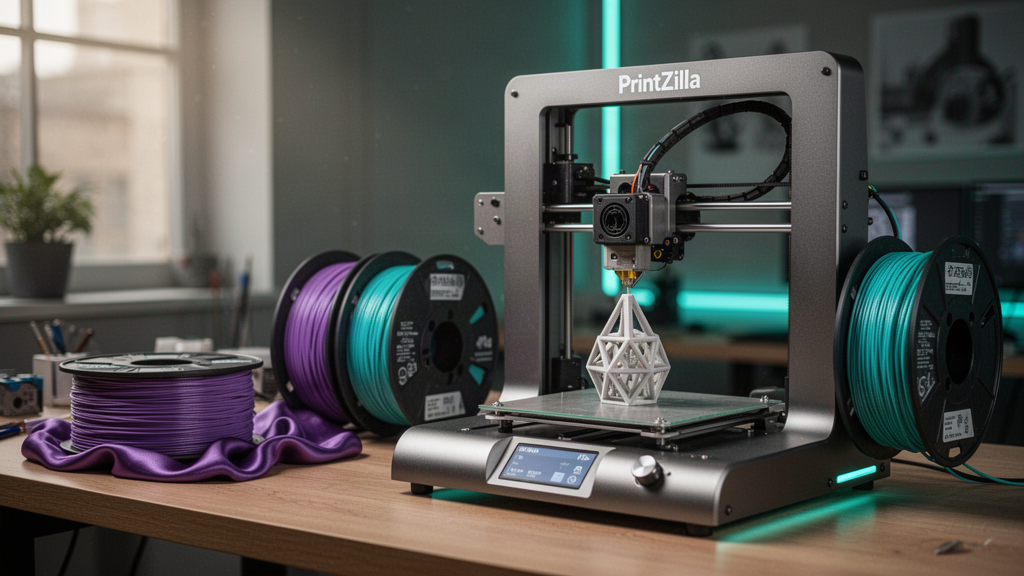
7–10. Craft organisers, shelf labels, prototype displays and decorative covers
7. Lightweight craft-tool organisers. Hold paintbrushes, pens or safe hobby accessories in compartments shaped for real equipment. Avoid printing unsupported wall mounts for heavy or dangerous tools. A freestanding tray is often easier to inspect, deliver and reproduce than a complicated assembly, while still offering useful personalisation.
8. Reusable shelf labels. A standard holder with changeable labelled inserts helps families, workshops and small businesses reorganise without replacing everything. Offer a limited set of tested sizes, colours and lettering styles. The label should be easily readable and removable without damaging the mounting surface. Special applications such as electrical cabinets or safety warnings require independent compliance review.
9. Prototype display models. Small businesses may commission a non-functional model to show proportions, ergonomics or branding during meetings. This is an especially useful opportunity when the maker understands CAD, dimensions and client communication. A display prototype is not proof that a proposed working product meets strength or regulatory requirements, so label it clearly as a concept.
10. Non-critical decorative end caps or covers. A correctly measured cosmetic cover can replace a missing visual piece on furniture or hobby equipment. Verify that the original part did not guard moving machinery, seal pressure, protect electrical wiring or perform a safety function. For anything safety-critical, recommend an approved replacement instead of an untested printed part.
What legal and product-safety checks apply when selling 3D prints in the UK?
Businesses putting consumer goods on the UK market have product safety responsibilities. In Great Britain, the General Product Safety Regulations and relevant product-specific rules may apply; Northern Ireland can follow a different regime. Makers should assess foreseeable use, provide appropriate instructions, keep adequate traceability and verify relevant standards before placing products on the market. A low print volume does not remove these duties.
Do not assume downloadable models or fonts can be sold merely because their files were free. Review commercial-use rights for each design, and consider additional trademark and character rights. Decorative items should not silently be marketed as toys, food-contact products, electrical enclosures, personal protective equipment or structural replacements. Those uses can bring specialist regulation and substantially greater risk.
Custom-made goods can have different change-of-mind cancellation provisions under UK consumer law, but customers retain protections for faulty and misdescribed products. Display clear dimensions, expected variation in finish, shipping and complaints procedures. The product idea is not a substitute for professional legal or safety advice where the intended use requires it.
How should you price a 3D printed product without guessing?
Begin with a real sliced model, the actual spool receipt and a measured production duration. Compute material consumed, electricity and realistic extra waste; then add design time, handling, finishing, machine wear, packaging, selling fees, tax where relevant and a margin that supports the business. One low-filament-cost print can still take substantial manual work, particularly when each customer changes names or dimensions.
A simple illustrative calculation: a 60 g object made from a hypothetical £20 per kilogram spool has £1.20 of raw filament. That is not the manufacturing price. If the job also requires customer approval, CAD revisions, maintenance allowance and shipping, the real cost will be significantly different. Compare the complete per-order economics before accepting a custom quote or an expensive promotional campaign.
Test demand with a small catalogue instead of claiming a specific product will earn a particular monthly income. Track enquiries, conversion to completed paid orders, actual build times, failed jobs, complaints and repeat purchases. If you cannot reliably deliver one excellent item, more listings only multiply the problems.
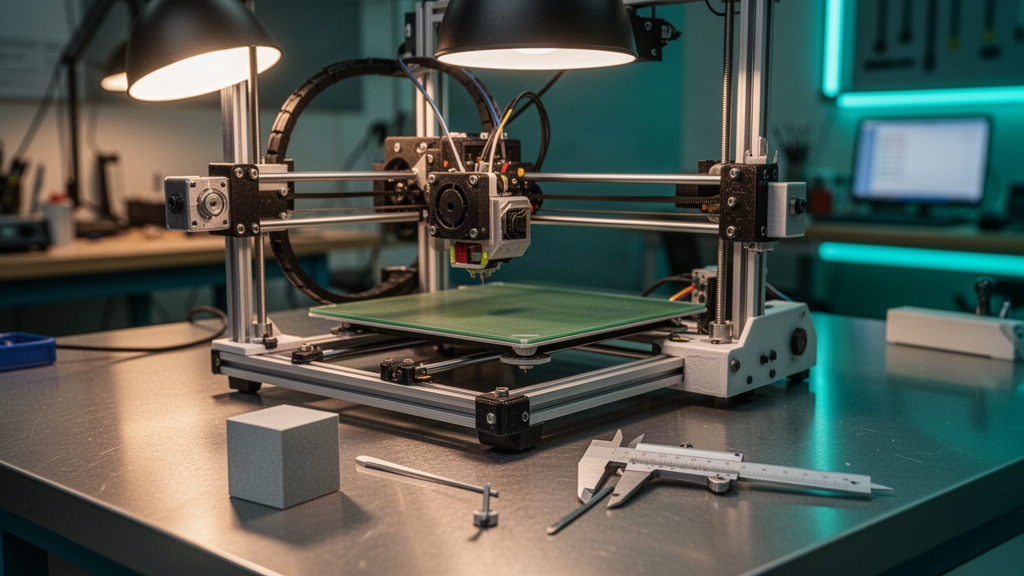
How do you launch a small 3D printing catalogue safely?
- Choose two or three non-safety-critical product families with clear customer appeal.
- Design or license the printable geometry and any commercial typefaces correctly.
- Print, photograph and physically inspect representative samples.
- Create a clear option list for sizes, names, colours and turnaround expectations.
- Document production time, materials and realistic failure or reprint rates.
- Review applicable UK product safety rules, traceability and consumer terms.
- Test fulfilment with a small number of real paid orders before expanding.
- Keep customer names and delivery details in private checkout, not public LIVE chats.
The most important early goal is confidence that a customer receives what they approved. A cinematic virtual model is excellent for showing choices, but it does not mean the physical item has been tested, printed or dispatched. Keep website previews, submitted enquiries, accepted orders and completed shipments as clearly different statuses.
Frequently asked questions
01Is selling 3D printed products profitable in the UK?
Profit depends on real demand, material and machine costs, design effort, product safety, fees and fulfilment. No product type guarantees sales or a particular margin.
02Can I sell prints of STL files I found online for free?
Only where the designer's licence and any other intellectual-property rights permit your exact commercial use. A free download alone is not permission to resell.
03Do small 3D print businesses need product safety checks?
Yes. Applicable consumer product safety and product-specific rules can apply regardless of business size. Check the intended use and seek qualified advice for higher-risk goods.
04Should I take orders through a TikTok LIVE comment?
A comment can initiate a request, but names, private contact details, price, payment and final manufacturing approval should be handled through a secure private order workflow.
Sources and useful references
We link to official documentation and publisher guidance where useful. Advice and platform features can change; verify current details with the original source, your printer maker and relevant service provider.
Turn a useful idea into a real product enquiry
Start with a repeatable design, clear options and a reviewed quote before accepting customer money or promising fulfilment.
Explore PrintZilla Creator Commerce