What you need to know.
Ten objects that can earn their place in your home: simple, personal, repair-friendly ideas with realistic guidance on what makes each one printable.
- Start with a real problem and measure the space the object needs to fit.
- Small organisers, labels and desk tools are sensible first projects because they are easy to inspect.
- Match PLA, PETG or TPU to the use case rather than to a fashionable finish.
- Avoid safety-critical parts, mains electrical fittings and items that require food-contact approval without expert validation.
Which 3D printing ideas are actually useful?
The best print fixes a small daily inconvenience, fits your space and does not need dangerous loads or specialist certification.
A 3D printer shines when an ordinary shop-bought product is nearly right but never quite fits. Perhaps a drawer divider is two centimetres too wide, the desk cables never stay put or a plant label needs to survive outdoors. Custom measurements and a small design change can turn a simple printed object into something you use every day. The ideas below favour practical, non-safety-critical projects that a hobby printer can reasonably attempt.
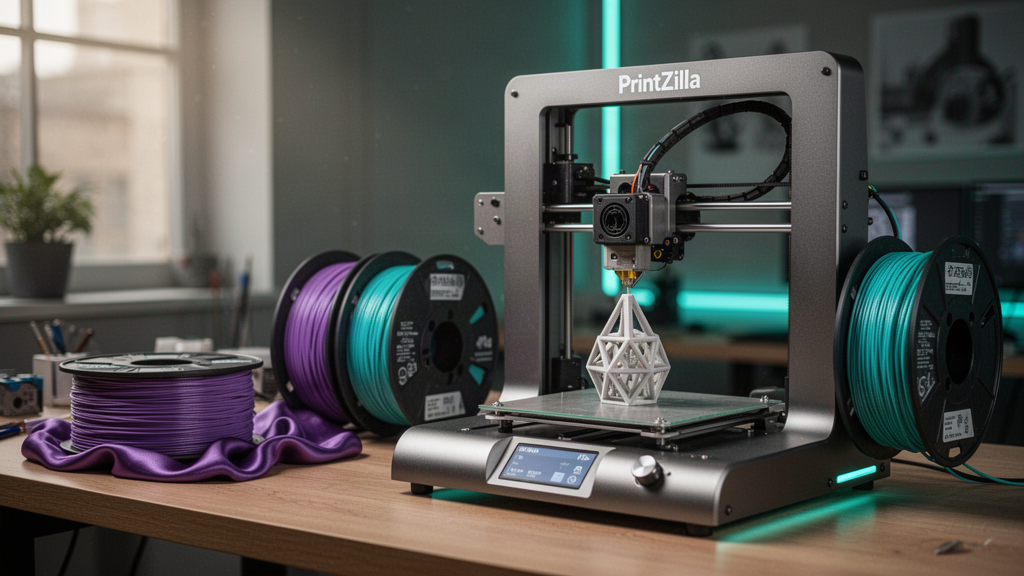
These are project categories, not pre-tested files or a ranking based on sales. You still need to inspect the geometry, select compatible filament and slice for your exact machine. PrintZilla's virtual studio lets you see layered deposition, but it does not prove that a proposed part has passed physical tests.
| Project | Difficulty | Design priority |
|---|---|---|
| Cable clip | Beginner | Fit without crushing insulation |
| Drawer organiser | Beginner | Measure usable internal dimensions |
| Plant label | Beginner | Outdoor material and legibility |
| Phone stand | Beginner to intermediate | Stable angle and base |
| Replacement knob | Intermediate | Correct shaft fit and safe use |
1–3. Cable guides, drawer dividers and plant labels
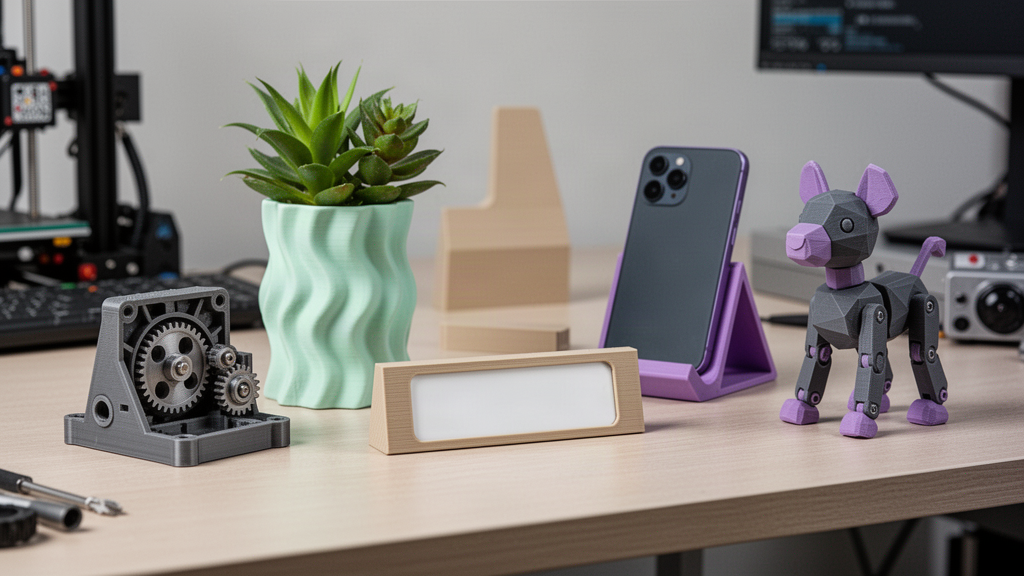
1. A desk cable guide. Measure the diameter of the leads and choose an opening that lets them move without pinching. A gently curved hook or open slot is easier to use than a tight snap-fit designed only from a photograph. Add a broad base or removable mounting method; never route damaged or high-temperature electrical cables through a printed holder.
2. Custom drawer dividers. Divide the available width into real compartments instead of guessing from the outside dimensions of a drawer. Rounded corners are kinder to hands and easier to clean. Print a short test segment first to check the fit, then scale the final design. PLA often works well for ordinary, cool, dry stationery drawers.
3. Plant markers and seed labels. A wide, high-contrast text face and generous lettering make labels readable from above. Outdoor designs need to tolerate moisture, sunlight and summer heat, so consider a suitably chosen weather-resistant material and avoid assuming indoor PLA is ideal for every garden. A simple recessed name can be easier to read than intricate thin lettering.
4–6. Phone stands, desk trays and personalised name signs
4. A phone stand. Choose the viewing angle for your own desk, measure the phone with its case, and design a wide base that resists tipping. Avoid relying on a tiny printed hinge to hold an expensive device. A slot for a charging cable can be useful, but keep the print well clear of plugs that heat up.
5. A stackable desk tray. Design the footprint around your paper clips, keys or accessories rather than a generic rectangular tub. Consider rounded internal corners and a lip that prevents stacked trays slipping. Test how the stack feels with real items before printing a complete set. A large tray consumes more time and filament, so avoid thick walls unless they serve a purpose.
6. A personalised nameplate. A connected font or backing plate prevents individual letters from falling away. The printable width depends on nozzle size and letter stroke thickness, not just the chosen layer height. For gifts, confirm the spelling twice and pick colours that stay legible under normal lighting. A virtual reveal can show the design, but a real order needs final dimensions and approval.
7–8. Tool holders and removable labelling systems
7. A small workshop tool holder. Tailor the slots to the tools you actually own, leaving clearance for handles and easy cleaning. Never treat a desktop-printed hook as a certified support for heavy equipment or anything that could injure someone if it failed. For light screwdriver or hobby-tool organisation, a freestanding tray is often more predictable than a wall mount.
8. A removable shelf or storage label. Separate a replaceable text insert from a reusable clip body to avoid reprinting the whole item whenever its purpose changes. Readability matters more than ornamental detail: choose a large font, comfortable contrast and a smooth accessible edge. If the label snaps over a shelf, test only a short section before committing filament to dozens of pieces.
The strongest maker workflow repeats a proven design. Save your source file and the chosen slicer project, note where the fit was too tight, then make one controlled revision. That is more valuable than downloading ten random files that do not match your actual shelf, drawer or equipment.
9–10. Replacement covers and simple invention prototypes
9. A non-critical decorative cover or cap. Measure the opening, account for the print's dimensional tolerance and ensure the part does not seal pressure, contain mains electricity, protect a moving mechanism or perform another safety function. A replacement cosmetic end cap can be a sensible project; a structural bike or appliance safety component is not.
10. A prototype for an original invention. Print a simplified mock-up of a grip, fit, shape or interface before designing the full product. A 3D prototype can answer concrete questions: Can a hand comfortably reach the control? Does the device fit on a small desk? Is a mounting hole where the drawing intended? Physical prototypes should be labelled exploratory until they have been assessed for their intended use.
Which material should you choose for each idea?
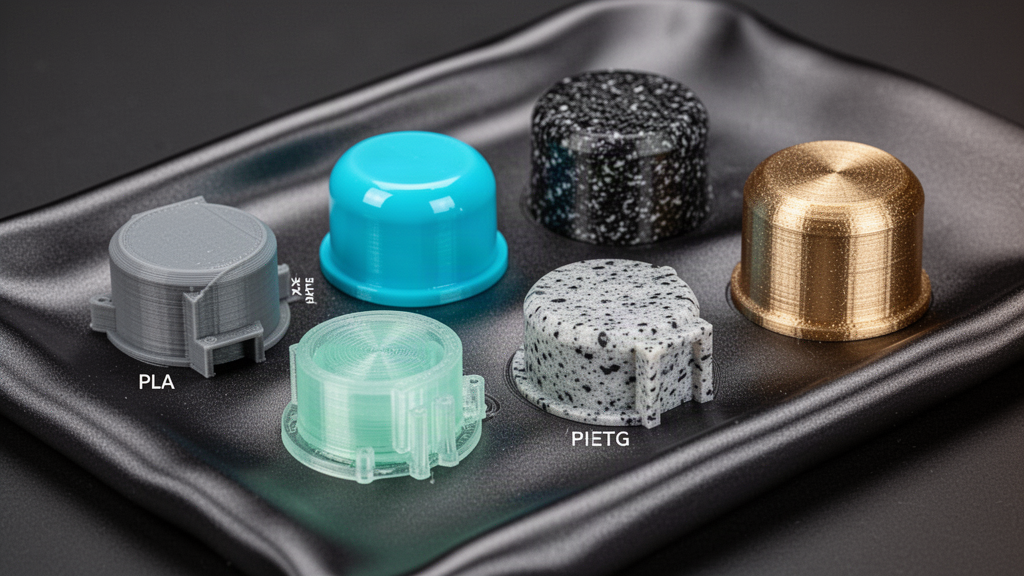
PLA is an accessible option for indoor decorative pieces, organisers and prototypes that stay away from significant heat. PETG can offer greater toughness and temperature tolerance for certain practical uses, though it may require different bed preparation and can be stringier. Flexible TPU is useful when an item genuinely needs to flex; it is not automatically appropriate for a clip that must stay rigid.
Ask whether the print will touch hot surfaces, weather, significant mechanical loads, food or skin. Some applications need an approved material, a validated manufacturing process or an entirely different production technology. Commercially produced parts may have certifications and engineering tests that an ordinary hobby print does not. Do not assume a filament's marketing name proves suitability.
| Use | Candidate | Why review it |
|---|---|---|
| Indoor organiser | PLA | Simple profile; consider heat exposure |
| Garden marker | Appropriate outdoor-grade material | Moisture, sunlight and temperature matter |
| Bendable protective pad | Compatible TPU | Check hardness and printer feed capability |
| Non-critical functional holder | PETG where appropriate | Fit, stiffness and orientation still matter |
Where should beginners find models, and what must they check?
Model-sharing libraries can be a useful starting point, but check every design's licence, fit, instructions and print orientation before using it. A file advertised as free is not automatically free to sell, modify or reproduce commercially. Scan geometry in the slicer for missing walls and supports; check the part's critical measurements and compare the material against the intended environment.
Start with a short, low-material test rather than a giant multicolour project. Keep hot tools and moving machinery away from children and pets, follow manufacturer ventilation guidance, and inspect the first layers. For a UK custom gift or commissioned prototype, agree on dimensions, colour, finish, expected turnaround and price before a physical job is started.
- Measure the intended space before opening CAD.
- Keep a backup of the editable model and slicer settings.
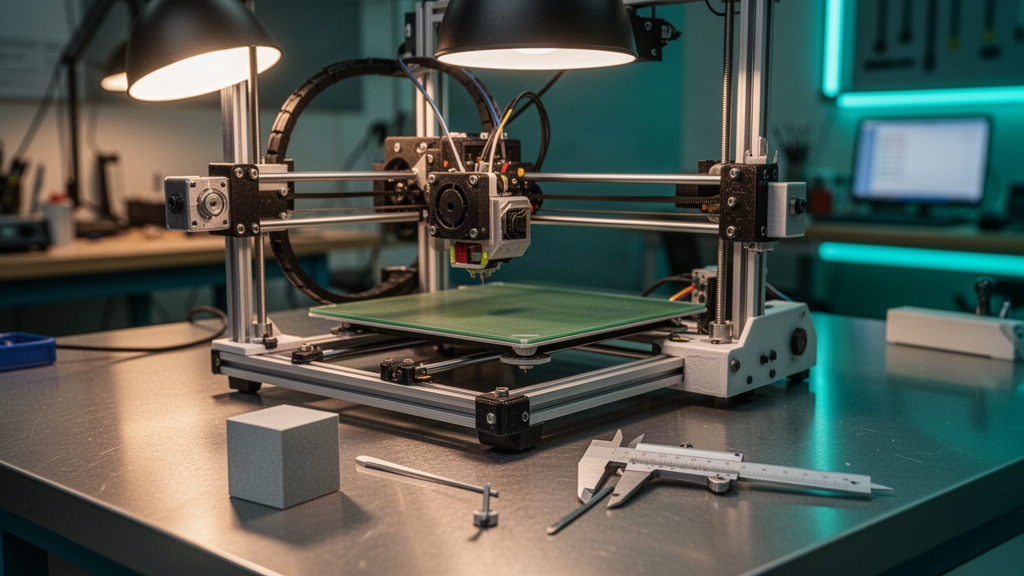
- Print a small fit test and write down the result.
- Check whether the part is genuinely non-safety-critical.
- Confirm design rights if sharing or selling printed copies.
Frequently asked questions
01What is the most useful thing to 3D print as a beginner?
A small custom organiser, plant label or cable guide is approachable because it is easy to measure, inspect and redesign. Use a compatible filament and validated printer profile.
02Can I sell items made from downloaded 3D models?
Only when the designer's licence or other rights permit your commercial use. Confirm the source terms and avoid copying protected designs without authorisation.
03Are 3D printed household items always safe?
No. Food contact, heat, electrical equipment, structural loads and child safety can require specialist design, materials and validation. Ordinary hobby prints should not be assumed suitable.
04Can PrintZilla manufacture one of these ideas?
You can submit suitable designs or enquiries for review. The virtual printer is a demonstration and does not itself book or complete physical manufacturing.
Sources and useful references
We link to official documentation and publisher guidance where useful. Advice and platform features can change; verify current details with the original source, your printer maker and relevant service provider.
Make something genuinely useful
Explore a virtual toolpath or submit an actual printable model for independent review, sizing and a confirmed quote.
Explore PrintZilla Printworks