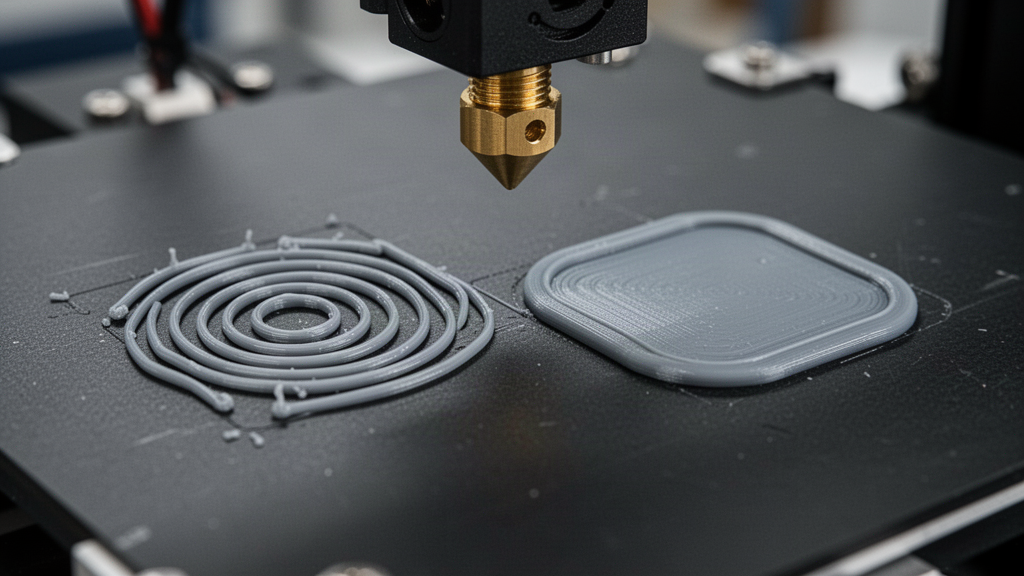
What you need to know.
Three popular filaments, very different personalities. Choose by how the finished object must behave, not just a spool colour or a promising description.
- PLA is usually the simplest choice for indoor models, gifts and early prototypes without heat or heavy mechanical demands.
- PETG can suit selected more demanding functional parts but requires suitable bed surface and extrusion settings.
- TPU is genuinely flexible; it needs a compatible feed system and slower, more controlled printing on many machines.
- No filament is automatically food-safe, load-rated, electrically safe or suitable for a medical or regulated product.
Which is better: PLA, PETG or TPU filament?
Choose PLA for approachable decorative detail, PETG for some tougher practical parts, and TPU only when the design needs to bend.
Filament names are shorthand for different engineering behaviours. PLA usually makes an attractive, accessible starting point. PETG is a useful step towards more tenacious and temperature-tolerant parts. TPU describes a family of flexible plastics used for protective and elastic objects. The 'best' choice depends on whether the finished part must look polished, stay rigid, absorb an impact, resist warmth or bend repeatedly.
Brand formulations vary, so always check the exact spool's material data and the printer manufacturer's approved profile. Reinforced and modified versions may behave very differently from standard materials. A product described as PLA+ or carbon-filled PETG is not guaranteed to have the same physical properties as another brand's similarly named material.
| Property | PLA | PETG | TPU |
|---|---|---|---|
| Typical feel | Firm, easy to detail | Tougher and less brittle in many applications | Flexible, grade-dependent |
| Approachable beginner print | Often easiest | Often manageable with correct bed | Usually needs more tuning |
| Warm environment | Limited for ordinary grades | Often better than PLA; still limited | Depends strongly on grade |
| Cosmetic finish | Very good detail | Can show strings or gloss | Flexible and sometimes less crisp |
| Example | Desk name sign | Non-critical holder | Protective bumper |
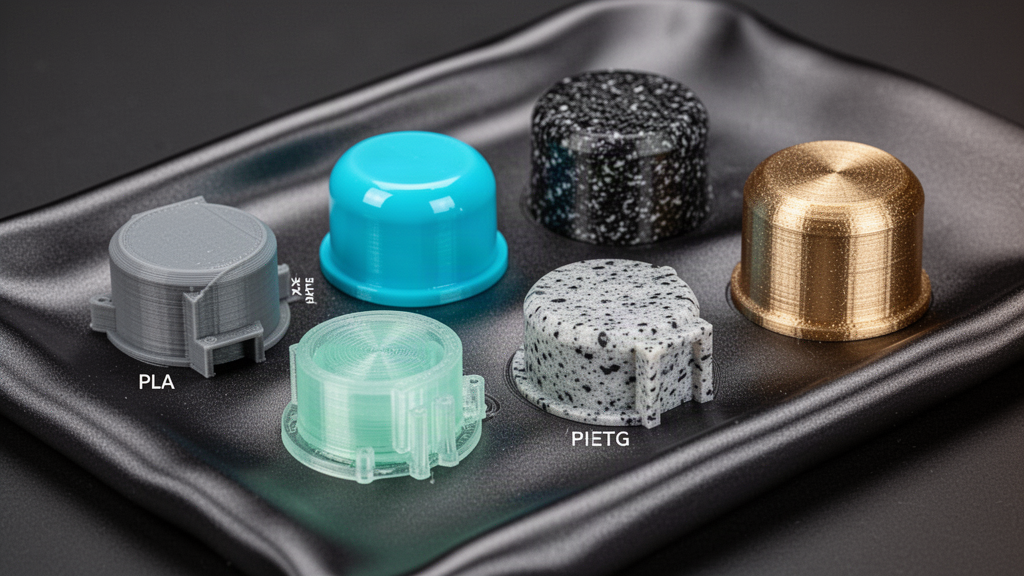
PLA: when a simple clean finish is the right answer
Standard PLA is widely used for figures, decorative prototypes, organisers, display objects and custom lettering. It is comparatively forgiving to print, often creates fine cosmetic details and usually needs less demanding printer hardware than many technical plastics. The trade-off is limited tolerance for elevated temperatures and some demanding loads. A dark-coloured object left in a hot car or near a heater may distort, even if the same design performs well on a cool desk.
PLA's popularity is not a universal safety endorsement. A printed PLA object can crack or creep under the wrong loads, and an ordinary printed item has tiny crevices and unknown production factors that make food-contact claims inappropriate without validation. Use a manufacturer-approved PLA profile, observe the first layer and keep the application aligned with the material's limitations.
PETG: good for some functional brackets and housings
PETG can offer more tenacity and better temperature tolerance than conventional PLA in many practical applications, and it can form strong layer bonds. That makes it worth investigating for non-critical brackets, holders and enclosures where a brittle snap would be inconvenient. It is not indestructible or heatproof. Wall thickness, orientation, long-term loading and individual brand formulation still decide whether the design is suitable.
PETG can be more prone to stringing, and its first-layer adhesion may be unexpectedly aggressive on certain smooth PEI surfaces. Prusa recommends compatible textured or satin sheets for many PETG profiles and warns that the wrong surface may be damaged. Verify your printer's material settings, sheet compatibility and cleaning instructions before printing. A glue layer may serve as a release layer, not simply a way to increase stickiness.
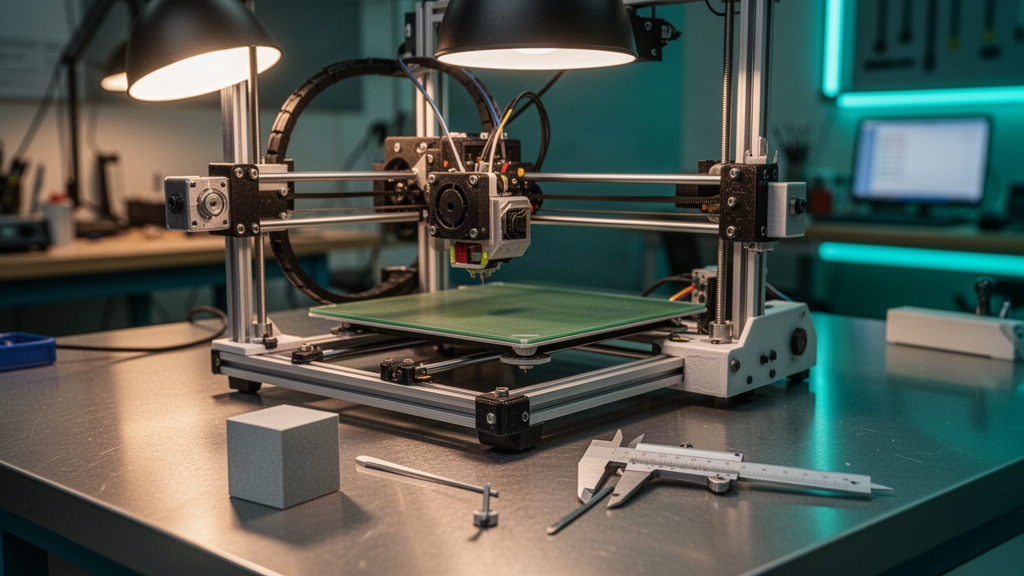
TPU: the right choice when a part must genuinely flex
TPU filament is used for flexible bumpers, grips, protective feet and related applications where controlled deformation is the point. A rigid PLA replacement could snap in a design intended to bend, while a soft TPU item might sag when the object needs stiffness. TPU hardness varies widely and is often described with a Shore grade; check the grade and actual printer compatibility before choosing it.
Many flexible filaments need slower extrusion, good spool handling and a suitable feed path. Some printers handle flexible materials with ease; others are much less forgiving. Flexible strand can bunch or buckle in an incompatible extruder, causing jams. Consult your exact hardware and filament maker rather than blindly copying rigid-material speeds or retraction values. A small flexible pad can be a good test before a complex case or grip.
PLA vs PETG vs TPU: what changes in a real print?
Temperature and cooling profiles differ. Conventional PLA often runs at a lower nozzle temperature than PETG, while TPU's optimal range depends on formulation and hardness. Print speed and extruder design also influence consistency. A slicer's generic default might get you started, but a verified material profile for your exact machine and spool is preferable. Do not swap filaments mid-job without checking transition temperature and purge procedures.
Layer adhesion and orientation affect the finished object in every material. A vertically printed thin tab can be vulnerable when force pulls layers apart, even if the polymer seems tough. A flexing part should be designed so repeated deformation happens in a direction that the printed structure can tolerate. For appearance, consider visible seam placement, nozzle diameter and material sheen alongside layer height.
| Question | Likely starting direction |
|---|---|
| Is it an indoor nameplate or ornament? | Ordinary PLA |
| Does a non-critical part need extra toughness? | Consider PETG |
| Must it repeatedly bend or cushion? | Check a suitable TPU hardness grade |
| Will it experience hot sunlight or a vehicle interior? | Do not assume any generic grade is appropriate; review actual temperature limits |
| Does the part hold a person, electricity, gas or pressure? | Use a qualified engineering/certification route, not a hobby material guess |
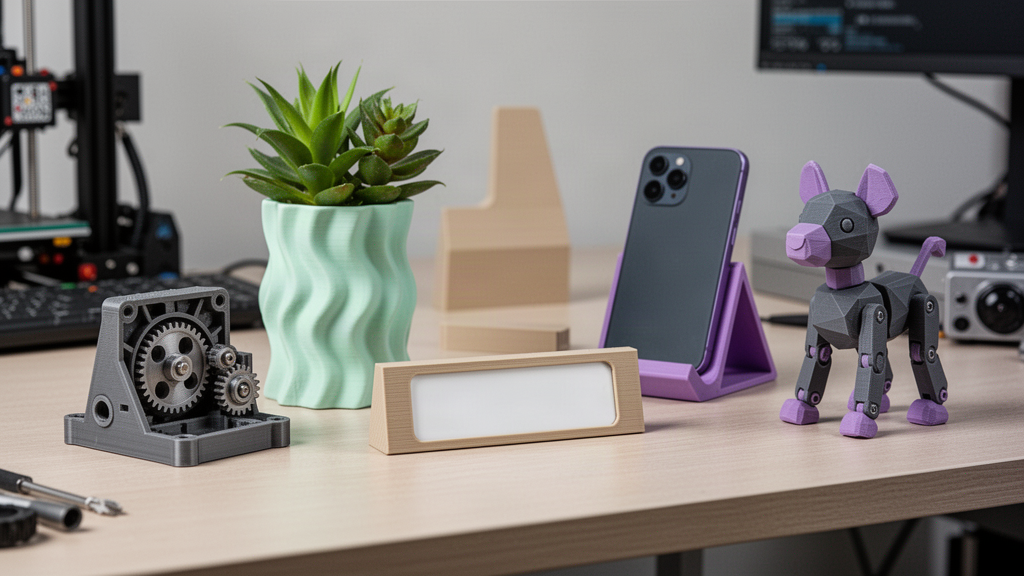
Does wet filament change print strength or appearance?
Some filament formulations absorb atmospheric moisture more readily than others. Moisture can contribute to popping, excess stringing, rough surfaces or less consistent extrusion. If symptoms suggest a storage problem, consult the filament maker's drying recommendations. Do not use an improvised domestic oven setting or exceed the spool's temperature limits. A sealed storage solution may be appropriate for materials that are regularly affected by humidity.
Inspect whether a defect is moisture-related before concluding that every string is a wet spool. Poor temperature tuning, travel behaviour or an unstable extrusion path can create similar symptoms. Save a small comparison test and change one condition at a time. Good practice is to label each spool with the grade, date opened and manufacturer profile rather than mixing unknown leftovers.
Which material gives the best value for a UK maker?
The cheapest price per kilogram is not necessarily the cheapest finished print. If a material is difficult to process on your equipment, failed tests and reprints can exceed the difference between two spools. PLA is often economical for basic decorative parts because it needs relatively straightforward handling. PETG may be worth a higher workflow cost when a more demanding but suitable functional requirement justifies it. TPU's slower printing or extra tuning can be sensible if flexibility is the whole purpose of the item.
For a professional quote, separate material quantity, machine time, design preparation, quality checks and post-processing. Avoid claiming that a particular polymer is safe for an application merely because it costs more. Compare exact manufacturer data, build plate compatibility and likely failure modes. Also consider whether repairing an existing part, using an approved off-the-shelf replacement or redesigning the assembly is a better choice than another 3D print.
Your five-step checklist before selecting a filament
- Write down the part's main duty: decoration, rigidity, toughness, cushioning or repeated flex.
- Record whether it faces heat, water, weather, moving parts or sustained loads.
- Check the exact printer, nozzle, extruder and build plate against the manufacturer's material guidance.
- Slice a short test piece and check fit, surface, flexibility and layer bonding in the real direction of use.
- Document the result, then approve the material and design before printing the full object.
If you are unsure, start with a simple non-critical sample and compare real results. The PrintZilla virtual studio can explain movement and finishes but not provide material testing or a physical certification. A good material decision remains specific to the part, the printer and the environment it will encounter. That is what makes a beautiful model into a useful product.
Frequently asked questions
01Is PETG always stronger than PLA?
No universal comparison applies. PETG can be tougher in some conditions, but actual properties depend on grade, geometry, orientation, print quality and the type of stress.
02Can TPU be printed on every 3D printer?
No. Flexible filament can require a compatible feed system, different speeds and specific material settings. Check the printer and the exact TPU grade.
03Which is best for a 3D printed name gift?
Ordinary PLA is often a reasonable starting point for a cool indoor decorative sign. Confirm colour, dimensions, intended environment and print quality.
04Are PLA, PETG or TPU automatically food-safe?
No. A filament name by itself does not establish food-contact safety. Material formulation, machine process, coatings and regulatory requirements need appropriate review.
Sources and useful references
We link to official documentation and publisher guidance where useful. Advice and platform features can change; verify current details with the original source, your printer maker and relevant service provider.
Choose a suitable finish with confidence
Explore filament appearance in the virtual showroom, or send an actual design for material and production review.
Explore 3D Printworks